Liverpool Conference 2026 Write-up
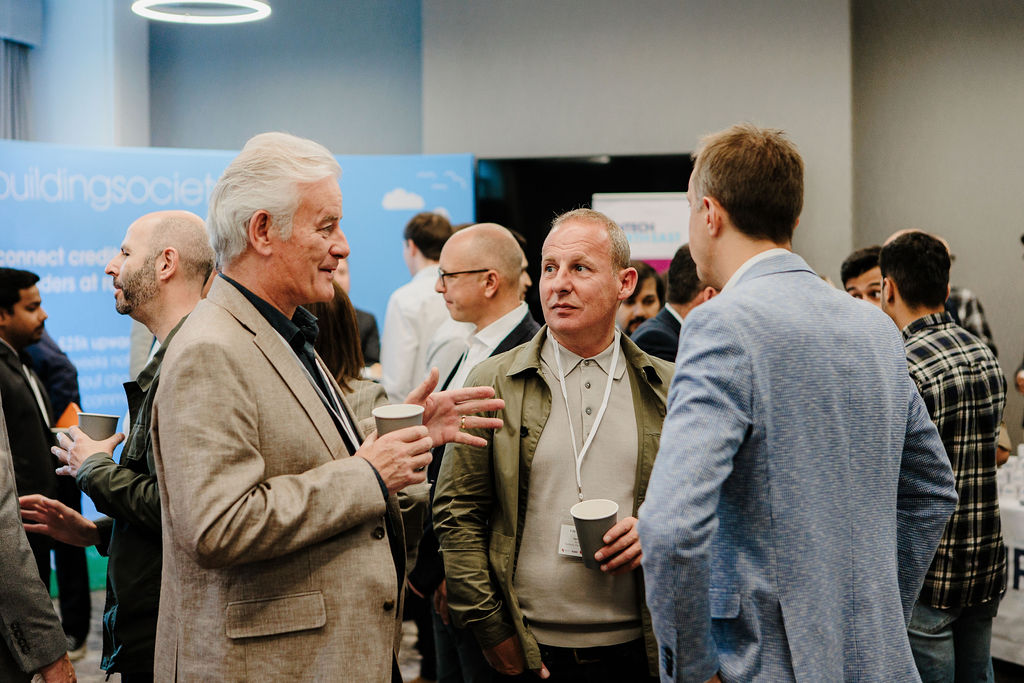
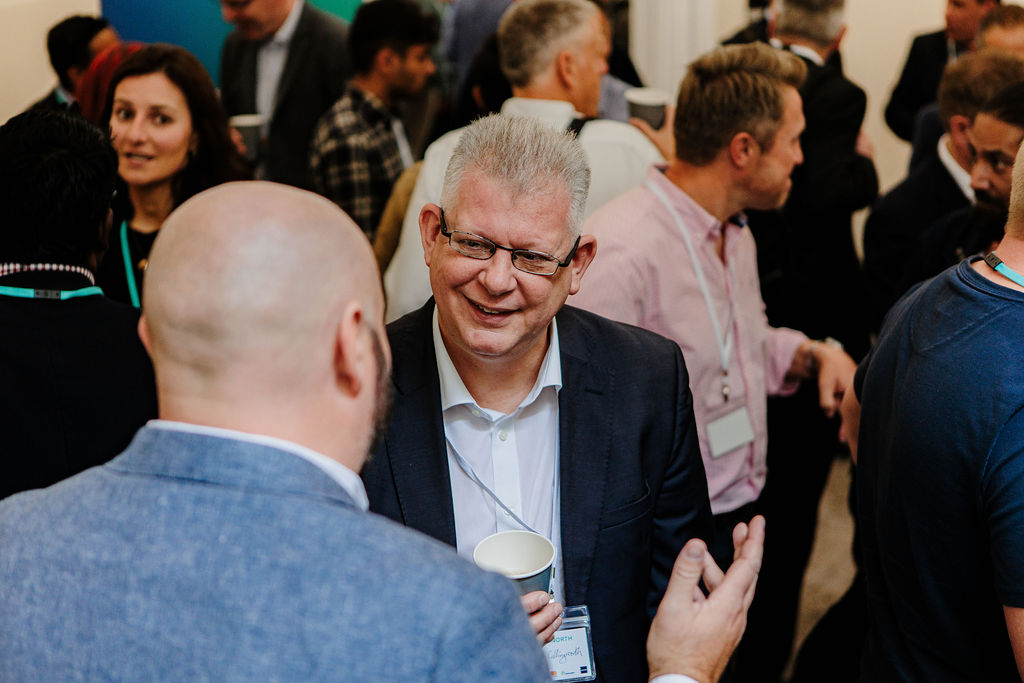
On the 19th of March, the Northern FinTech community came together for our first flagship conference of the year in Liverpool.
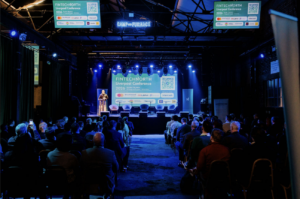
The conference, hosted in partnership with Mastercard, Lenvi, DTM Legal, Bruntwood SciTech, Liverpool City Region Combined Authority, and evening social sponsors, Intercash, continued our tour of the Liverpool City Region, this time at Camp & Furnace.
Located in the heart of Liverpool’s Baltic Triangle, Camp and Furnace is a live music and events venue set within converted industrial warehouses from the city’s docklands past, now surrounded by a thriving creative, digital and tech district. The venue is a frequent location for tech events and aligns perfectly with our focus on showcasing culturally and historically significant spaces across the North.
Click here to view the photos from the conference.
We saw strong engagement on the day, with over 80% attendance, welcoming 140 delegates. This strong turnout is a testament to the region’s ever-evolving ecosystem and its commitment to collaboration and sector advancement.

The conference kicked off with a buzzing morning networking session, before delegates took their seats for the morning session’s FinTech sector outlook.
Sector outlook
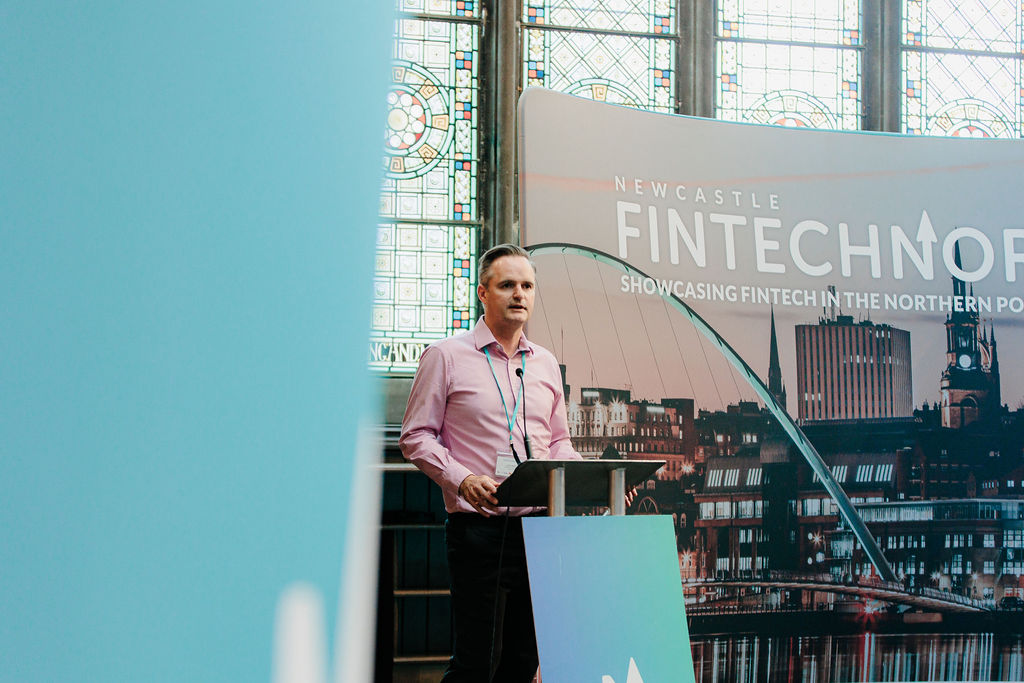
Joe Roche, General Manager of FinTech North, welcomed delegates, sharing FinTech North’s story as an organisation ten years on. He highlighted our strategy, the importance of our partners, our growth, our community impact, and the strength of the North’s FinTech ecosystem.
Next, Rob March, Investment and Internationalisation Lead: Creative & Digital at Liverpool City Region Combined Authority took to the stage to provide a welcome and regional update.
This opening address set a confident tone for the conference, positioning Liverpool as a historic gateway reimagined for the digital age:
‘We are no longer just a port for ships; we are the port for Digital Commodities. We are porting data, porting security, and most importantly, we are porting Trust.’
Framed as a ‘beacon’ for the Fourth Industrial Revolution, Rob highlighted the Liverpool City Region’s rapid FinTech growth, strong talent pipeline, and the rising credibility of its innovation ecosystem.
Building on this momentum, Rob emphasised Liverpool’s position as a proven and competitive force within the UK’s FinTech landscape:
‘The North is no longer “emerging.” The North has arrived.’
At the same time, it struck a pragmatic note on what comes next- ‘Ideas are cheap. Scale is expensive.’ – reinforcing both the scale of the opportunity and the region’s readiness to meet it, with the foundations firmly in place for sustained, global growth.
Next to the stage was Ezechi Britton MBE, Co-Founder & Director of Collectively Better, who delivered the Chris Sier Keynote in our late chairman’s honour.

The keynote provided a fitting and powerful tribute to Chris, setting the tone in the spirit he was known for – direct, challenging, and unapologetically honest. Ezechi balanced reflection with forward-looking insight, embracing Chris’s trademark style of confronting uncomfortable truths and cutting through industry hype.
Ezechi spoke on the maturation of FinTech as it moves beyond a decade of easy capital and rapid growth into a more disciplined, ‘grown-up’ phase defined by durability, trust, and real economic value.
He challenged the sector’s tendency to prioritise narrative over substance, questioned the true impact of AI amid widespread hype, and reinforced that future success will be built on trust, regulation, and genuine usefulness.
Ezechi asked:
‘Is AI actually transforming our businesses, or are we just very good at telling ourselves that it is?’
He continued to note:
‘If every FinTech claiming to be AI-driven actually was, we would already have reinvented financial services.’
He also delivered a clear and confident message on the rise of regional ecosystems like Liverpool, not as emerging alternatives, but as established, high-performing hubs that are actively reshaping where and how FinTech innovation happens in the UK.
The speech was a real highlight of the event, and was truly inspiring and thought-provoking, just as Chris’s would’ve been.
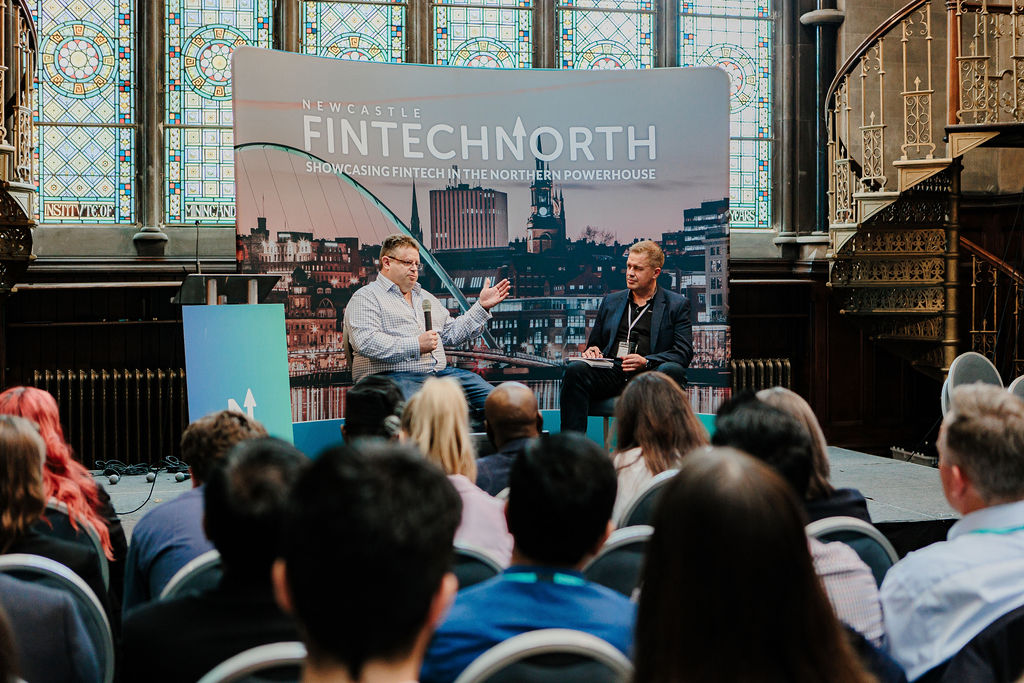
Continuing the sector outlook theme, the next panel, titled Anchored in the North: A Regional FinTech Outlook, brought together industry experts across professional services, FinTech and academia:
- Sam Goodacre, Director of Product, Lenvi
- Gavin Brown, Associate Professor in Financial Technology, University of Liverpool
- Tom Woodroof, Co-Founder, Local Loop Merseyside
- Lucy Mounter, Director of Business Development & Strategy UK, Intercash
- Stefan Haase, Director, Whitecap Consulting
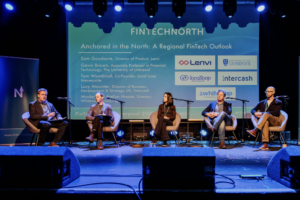
The panel, chaired by Stefan Haase, reflected a sector defined by both maturity and ongoing change, with rapid technological advancement, evolving regulation, and shifting customer expectations reshaping the landscape. Stefan noted, ‘Our sector is maturing, but with that also comes disruption.’
The conversation also highlighted the UK’s FinTech strength, with regional ecosystems continuing to play an important role in enabling innovation and connecting local capability to broader markets.
Lucy emphasised resilience as a key theme in today’s fintech environment, noting Intercash’s global ecosystem of fintech and banking partners that supports stable and scalable payment card programmes across a range of markets and use cases. Sam reinforced this, highlighting the importance of understanding core strengths and selecting complementary partners carefully.
Sam also framed resilience as multi-dimensional, spanning technology, operations, and leadership, underpinned by adaptable systems and strong organisational culture.
Talent and technology, particularly AI, were key areas of focus. While AI is accelerating development –‘the potential for building systems with much lower technical debt is remarkable,’ as Tom noted -there was a clear reminder from Sam that speed must be matched with purpose. Gavin further reinforced the importance of closer collaboration between academia and industry in strengthening talent pipelines and ensuring skills remain aligned with market needs.
Ultimately, the discussion highlighted a sector moving forward through collaboration, purposeful innovation, and stronger alignment between industry, academia, and regional ecosystems.
The final session before lunch saw a keynote titled How Mastercard supports FinTechs to grow and scale, delivered by Samuel McGurk, Business Development Director at Mastercard. Sam provided an inside look into some of the work of Mastercard beyond cards, supporting FinTechs to Launch, Scale and Succeed, Getting New Payments Products to Market Faster, and encouraged FinTechs to connect with them.
Risk, Regulation & Resilience
Following a vibrant networking lunch, delegates returned for the afternoon session, where more pertinent sector themes, including regulation, risk, operational resilience, banking and WealthTech were explored, and topics like AI, partnerships, and trust continued to play a key role across the day.
Peter Cunnane, Director of International and Partnerships at Innovate Finance, came to the stage, delivering a UK FinTech update and an overview of the current regulatory environment. He spoke about Innovate Finance’s ongoing support of the sector, being the representative body for UK FinTech, and outlined their role in shaping policy and regulation.
Following this, a panel titled The Future of Risk: AI’s Role in FinTech, Compliance, and Innovation, explored one of the sector’s most talked about topics. We were joined by:
- Kate Roberts, Partner & Head of Liverpool, DTM Legal
- Swati Sachan, Artificial Intelligence in FinTech,University of Liverpool
- Andy Porter, Commercial Director, iCede
- Ian Cartwright, Principal Technical Consultant, Softwire
- Manasi Kulkarni, Co-founder & CEO, conveyd
A key theme was the importance of distinguishing between different types of AI, with Ian noting that it should not be treated as a single technology when assessing capability or risk. The discussion also highlighted the central role of data quality, with Swati stressing the need for robust, continuously reviewed data and strong governance to manage risks such as bias and unreliable outputs. Manasi added that AI is well-suited to rule-based, compliance-driven environments, while more open-ended use cases bring challenges around hallucinations and context, reinforcing the need for clear oversight and a human-in-the-loop approach.
The panel also focused on regulation, trust, and future impact. There was consensus that regulation is struggling to keep pace with innovation, contributing to caution and increased self-regulation. AI is already enabling automation across finance, insurance, and legal tech, requiring organisations to define where human input remains essential. Andy noted emerging insurance solutions for AI-related risks, though these are currently costly and geared towards larger organisations. Overall, the discussion emphasised the need to balance innovation with governance, as AI continues to reshape roles, create efficiencies, and introduce new uncertainties.

Collaboration, Partnerships, Banking & WealthTech
Next to the stage, Robyn Demming, UK B2C Lead at Raisin, spoke about innovation within FinTech partnerships and how collaboration can drive stronger business outcomes. She highlighted a shift away from the traditional ‘FinTech vs bank’ narrative towards a more collaborative model, where both can work together without losing their identity to deliver better customer outcomes. This change is being driven by evolving customer expectations, with Robyn noting that ‘consumers are comparing their banks to other services like Uber and Netflix’ expecting seamless, real-time, and personalised experiences. She emphasised that partnerships allow organisations to combine the trust and security of banks with the innovation and agility of FinTechs to enhance customer value and deliver more tailored experiences.
Continuing the banking and financial services theme, the next panel explored the evolution and impact of banking today, as well as the opportunities and risks for the future. We were joined by experts across neo-banking, payments, professional services and Digital ID to provide a holistic view of the subject:
- Victoria Wells, Head of Economic Crime, Zempler Bank
- Nick Armstrong Dryden, CEO, FinGo Identity
- Gavin Sharpe, Consulting Director, Prudential Risk Advisory, RSM
- Clare Pearson, Founder & Director, Pearson Booth Consulting
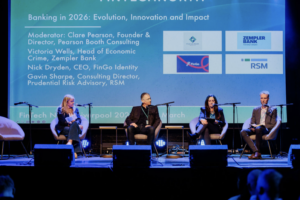
Victoria highlighted the importance of adaptability, balancing customer experience with fraud prevention and regulatory expectations, while also pointing to the role of neo-banks in setting new standards for speed, transparency and accessibility, particularly for SMEs. Nick focused on the importance of digital identity, arguing that moving beyond devices towards verified human identity can enable more secure, personalised and frictionless transactions. Gavin discussed tokenisation and the growing diversification of banks into areas like wealth management, alongside increasing regulatory change. At the same time, Clare noted the significant hype around payments innovation, including open banking, and the unprecedented level of regulatory collaboration across the sector.
A key takeaway was the convergence of technologies such as identity, tokenisation and open ecosystems, and the need for banks to align technology with clear strategic goals. The panel emphasised that innovation must be purposeful, with strong infrastructure, operational resilience and customer-centric design at its core. The discussion also highlighted emerging trends such as stablecoins, CBDCs and the growing non-banking financial space, alongside rising regulatory scrutiny, tighter margins and increased fraud risks. Overall, the panel reinforced that the future of banking will be shaped by collaboration, smarter regulation and a focus on delivering faster, more intuitive and inclusive financial services.
Ecosystem Spotlight
Following the next networking break, Stefan Haase, Director of Whitecap Consulting returned to the stage to share the findings of their recent North of England FinTech Report 2025, highlighting FinTech’s strong contribution of over £5 billion GVA to the North’s economy each year and its deep regional expertise in banking, WealthTech, payments and lending. He also expanded upon the report’s recommendations to support continued sector growth, including a FinTech accelerator, an investment fund, an innovation challenge, a placements programme, and a reskilling programme.
The afternoon session closed with a FinTech North community favourite, our start-ups in the region showcase, which was hosted by Rachel Siner, Operations Manager at Baltic Ventures. The showcase featured pitches from three innovative start-ups:
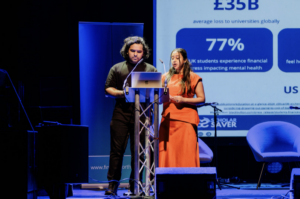
- Vipashyana Srivastava & Ashish Sandhu, Co-founders of Scholar Saver, a platform helping students and families plan, save, and manage education-related finances more effectively.
- Phil Melia, Founder & CEO of BreezeMove, a platform simplifying and streamlining the process of relocating, connecting users with the services needed to move homes.
- Olivia Cooley-Dawes, Co-founder of ClassHoppa (pre-record), a platform enabling flexible, on-demand access to educational classes and learning experiences.
The conference drew to a close with a final celebratory networking session at the evening social, allowing attendees to build on connections made on the day and continue to discuss the insights shared that day.
Thank you to our brand sponsors, Mastercard, Lenvi, DTM Legal, Bruntwood SciTech, Liverpool City Region Combined Authority, to our evening social sponsors, Intercash, to all of our brilliant speakers, and our community for making this event possible.

For more information and for opportunities for collaboration, please reach out to us at info@fintechnorth.uk.