FS Futures: Banking & Payments Write-up
On the 14th of May, the northern FinTech community came together in central Manchester for our inaugural FS Futures: Banking & Payments conference, hosted in partnership with BPC and hosted by Sister.
The event attracted over 200 registrations and we were joined by over 110 delegates on the day. The session saw great audience engagement with extended audience Q&A and lively discussions during the networking breaks.
Welcomes and Sector Outlook
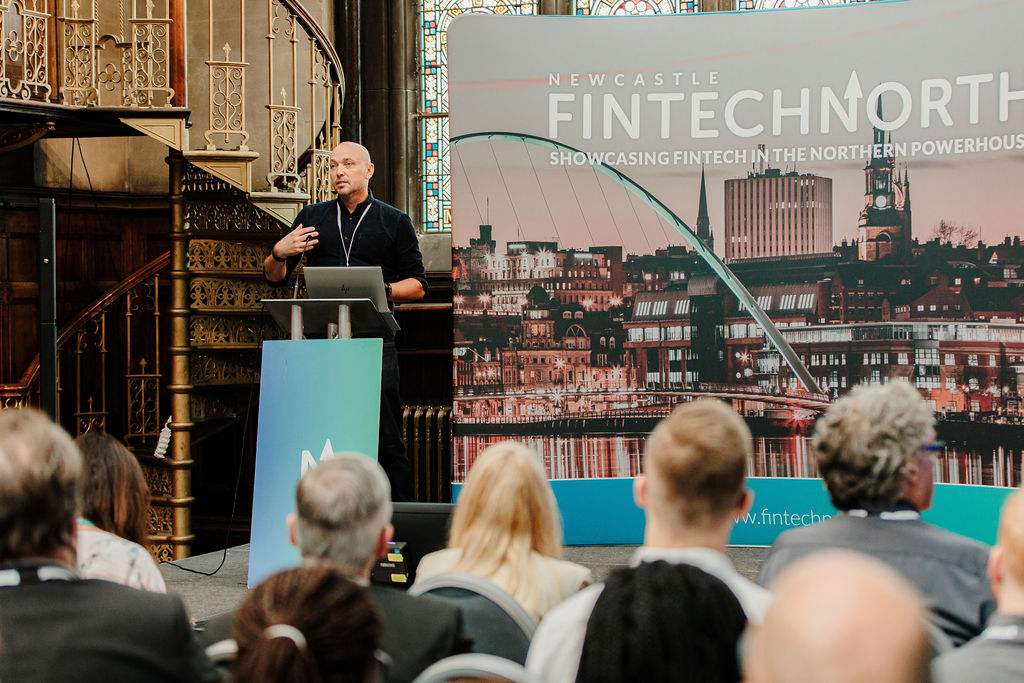
Joe Roche, FinTech North’s General Manager, kicked off the session by introducing the organisation, its story so far, and highlighting the breadth and diversity of the ecosystem.
Dr. Karim Bahou, Head of Innovation at Sister was next, introducing the joint venture between Bruntwood SciTech and The University of Manchester. He highlighted their activity, including events, networking, mentorship, and opportunities for collaboration, before highlighting their upcoming plans for growth.
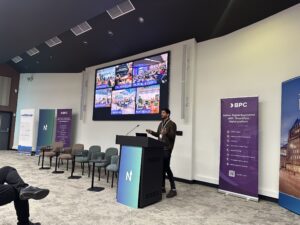
Julian Farley, Sales Director, UK & Europe at BPC then came to the stage and welcomed attendees, sharing an overview of their role and capabilities in payments and banking technology. They highlighted how they drive innovation, deliver experience, simplify payments by enabling the wider Financial ecosystem using their SmartVista Integration Platform, before encouraging attendees to connect to learn more.
Drawing on Joe’s earlier presentation, Foluso Laguda, Strategy and Innovation Consultant at Whitecap Consulting unpacked the findings of Whitecap Consulting’s 2025 North of England FinTech Report, highlighting the key specialisms across the north, particularly in banking, payments and lending. He went on to highlight the recommendations of the report, to support the continued growth of the ecosystem in areas like funding, skills development, accelerators and innovation challenges.
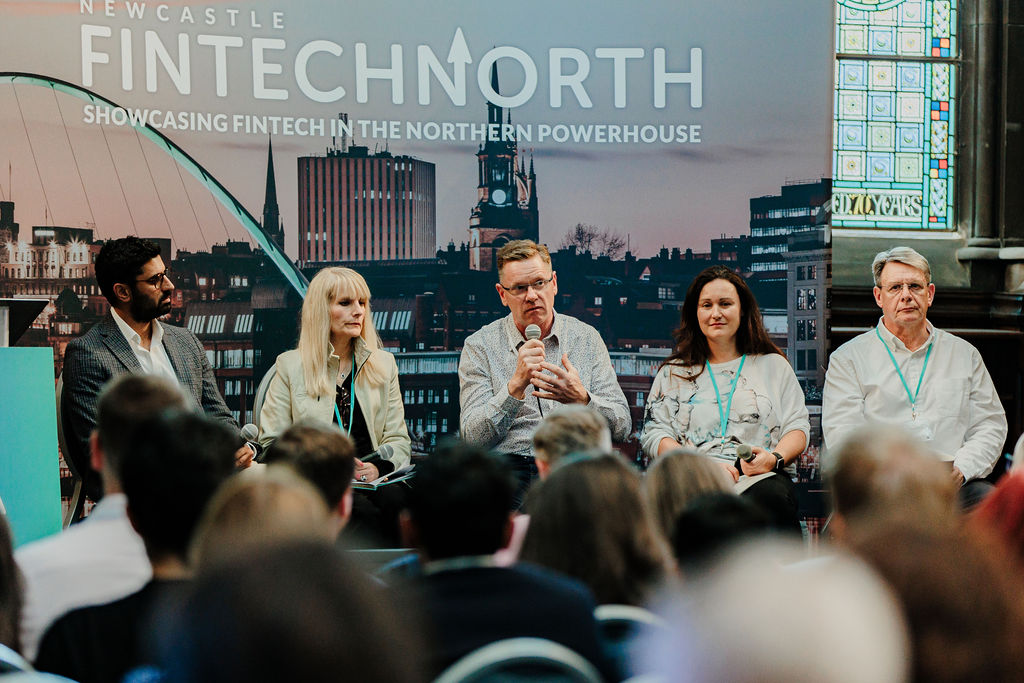
The first panel of the day saw a vibrant discussion on the evolution of banking and financial services, strongly influenced by new technologies, customer experience and choice. The panel, moderated by Paul Love Twelves, Consultant at BPC, brought together a range of perspectives from the banking landscape: Robert Thickett, Digital Policy Manager at BSA; Deborah Walker, Director of Development at Manchester Building Society; Lindsay Gustafsson, Non-Executive Director at Leeds Credit Union; and Andy Sacre, Head of Payments at Monzo.
Paul framed the discussion with the quote ‘banking is not somewhere you go, but something you do,’ after outlining the key milestones in the evolution from branch to digital banking.
Despite the momentum towards digital banking, the discussion strongly reinforced the continued importance of human and hybrid models. Deborah highlighted a people-first approach at Manchester Building Society, emphasising that branches remain valuable for customers of all ages seeking face-to-face support, education, and community connection. Lindsay echoed this from the perspective of Leeds Credit Union, stressing financial inclusion and a blended model that prioritises customer choice.
Andy offered a contrasting neobank view from Monzo, noting that while Monzo is branchless, it remains highly customer-shaped through digital communities – and even sees unexpected growth in areas like cheque usage. A key challenge to assumptions emerged: branches are not just for older customers or simple transactions, but act as community hubs across demographics, with digital literacy varying significantly by region. As Deborah noted, ‘Digital savviness and financial savviness are not the same.’
The panel also placed strong emphasis on education, empowerment, and preparing customers for emerging risks and technologies. Robert highlighted opportunities for branches to support fraud prevention and financial crime education, including initiatives like fraud clinics, while Lindsay pointed to dedicated education teams supporting money management.
Deborah reinforced the need for stronger financial education in a world where complex products and phenomena – such as crypto – can create both opportunity and harm, stressing that many young people lack foundational understanding of concepts like interest and mortgages.
On technology, Andy discussed reframing crypto through practical use cases such as tokenised deposits, CBDCs, stablecoins, and international payments, alongside evolving thinking on AI from exclusion to understanding and integration. Looking ahead, the panel pointed to agentic payments, open banking growth, and continued hybrid evolution, underpinned by shared themes of education, community, choice, and balancing digital innovation with human connection.
Central Bank Insights: DLT Innovation Challenge
Closing the morning session was Prem Munday, Lead Solution Architect – DLT & Blockchain at Bank of England. Prem highlighted the Bank’s DLT Innovation Challenge, which explored how distributed ledger technology could be applied to wholesale payments and settlement. The Bank note that applying the technologies currently employed in crypto-asset markets to wholesale payments offers the potential for payments to be embedded more efficiently and deeply into our increasingly digital economy. Key themes included atomicity, interoperability, and the importance of network and asset controls in DLT systems
Fraud and Risk Landscape
After lunch, attendees returned to the auditorium for a panel titled Navigating Fraud, FinCrime and the role of Tech in the Risk Landscape. The panel, facilitated by Vijay Ray, Associate Director at RSM, brought together industry experts: Peter Jones, Director – UK MLRO, Head of Financial Crime Compliance at CapitalOne, Naheed Akram, Director, Karakor Consultancy, and Chris Anderson, Managing Partner, CubeMatch to unpack the growing complexity of financial crime risk.
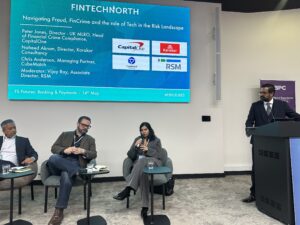
A central theme was the need for clearer regulatory direction, with Pete calling for the FCA to ‘pin their colours to the mast; and provide more explicit guidance on what ‘good’ looks like. Alongside this, Chris highlighted governance as a foundational issue, while Naheed stressed that automation does not remove responsibility, it simply redistributes it. Across the discussion, there was a shared view that the core challenge is often not the technology itself, but the operational complexity and delivery gaps that prevent systems from working effectively, particularly when firms struggle with high-risk customers, inconsistent controls, or overly complicated frameworks.
The conversation then shifted to data, collaboration and AI, where the panel focused on the gap between theoretical potential and real-world execution. Intelligence sharing was seen as critical in tackling financial crime at scale, but uneven in practice, with Naheed noting that the key question is how effectively organisations can absorb and use shared data, and that those able to ‘digest data the quickest will respond best.’ AI prompted further debate about hype versus genuine value, with concerns around explainability and control, including the risk of adopting tools without understanding their limitations.
Pete also pointed out that firms are not penalised for avoiding AI, but can be penalised for using it badly, underscoring the importance of governance. Looking ahead, Chris touched on emerging risks such as quantum computing and its potential impact if it falls into the hands of malicious actors, alongside the broader challenge of firms becoming “quantum ready” in time.
Naheed highlighted a different but related pressure: increasing regulatory scrutiny around human understanding and accountability in the use of technology. The emphasis, she suggested, is shifting not just to what tools firms use, but how well they can evidence understanding of those tools and the decisions being made.
The discussion then closed on practical priorities for firms navigating this evolving landscape. These included clear ownership of risk, robust end-to-end operational design, and stronger regulatory literacy across teams. Taken together, these were framed as the core foundations needed to manage both current financial crime risks and those emerging from rapidly advancing technology.
The Future of Payments Infrastructure
The following session saw a forward looking exploration of the Future of Payments Infrastructure, expertly moderated by Clare Pearson, PSR Panel Member and Founder of Pearson Booth Consulting. The panel featured perspectives from: Tom Burton, Director, External Affairs & Public Policy at GoCardless; Josh Cowen, Partnerships & Key Account Manager at tell.money; and Parveen Dhanda, Co-COO at Gemba.
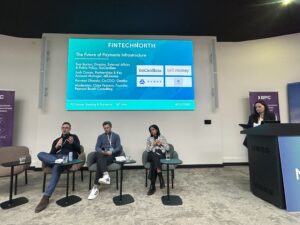
The discussion centred on the growing interconnectivity of payments infrastructure in the UK, with banking, fintech and infrastructure perspectives converging around the shift towards account-to-account payments becoming mainstream. Key developments such as VRPs, the work of the Payments Board and Bank of England, and the early emergence of agentic commerce framed a broader sense of structural change in the ecosystem.
A central theme was the evolution of open banking, account-to-account payments and their relationship with existing systems like direct debit. Josh described VRPs and A2A as part of the same wider shift, moving towards a model where payments infrastructure functions more like a messaging and orchestration layer than distinct rails. Tom highlighted that A2A growth is now a stronger driver than open banking alone, while direct debit remains resilient due to entrenched usage in recurring payments.
However, competing incentives and fragmented commercial priorities continue to slow alignment on a single industry direction, with legacy systems and innovation expected to coexist for some time. Use cases remain limited in some sectors, but expansion into lower-risk regulated industries is gradually opening new opportunities.
The conversation also focused on trust, compliance and the future role of automation in payments. Parveen emphasised the need for strong trust frameworks and programmable guardrails as the industry moves towards more machine-driven commerce, where liability and permissions must be clearly defined. Tom pointed to practical progress through faster payments development, FCA live testing and the potential for A2A to compete more directly with card networks, while noting that change will be incremental with a possible tipping point around 2026.
Josh highlighted UK leadership in areas such as confirmation of payee and the importance of improving fraud prevention and behavioural verification. Overall, the panel agreed that closer collaboration between banks and fintechs will be essential in building a more connected, efficient and interoperable payments ecosystem.
Banking Innovation in the Ecosystem
The conference closed with a FinTech North community favourite, the showcase – a series of start-up pitches showcasing the innovation within the wider ecosystem. We were delighted to be joined by:
Jen Lothian, CEO and Co‑founder of Onteric – the UK’s leading neurosymbolic AI provider and an enterprise‑grade platform delivering transparent, consistent, and compliant results. Drawing on deep sector expertise, the team has spent decades designing and delivering groundbreaking data and AI solutions across government and industry.
Priya Lakshmi, Founder & CEO of AISSURED – a company focused on AI assurance and responsible AI governance solutions designed to help organisations evaluate, manage, and improve the safety, transparency, and compliance of AI systems in production environments, enabling more trusted and controlled adoption of artificial intelligence across enterprise use cases.
Gerardo Brillante, Senior Sales Manager at ZEN.COM – a Polish fintech platform providing digital financial services and payment solutions that support consumers and businesses with secure money management, cross-border transactions, and modern payment capabilities across the European market.
As the conference drew to a close, delegates came together for a final networking session to continue to build on the insights gleaned throughout the day.
Thank you to everyone who made ths event possible – to our sponsors, BPC, hosts, Sister, to all of our brilliant speakers, and to our community for attending.
For more information on upcoming events and opportunities for collaboration, please reach out to us at info@fintechnorth.uk.