Navigating Risk 2026: Resilience and the Year Ahead Write-up
On 29 January, the Northern FinTech community came together for our first event of the year, Navigating Risk 2026: Resilience and the Year Ahead. The event was delivered in partnership with DTM Legal and hosted by Barclays Eagle Labs at Avenue HQ, Mann Island.
The evening welcomed a highly engaged audience of 40 attendees from across Liverpool’s FinTech ecosystem and beyond, highlighting the continued appetite for collaboration and discussion around risk, resilience and trust in financial services.
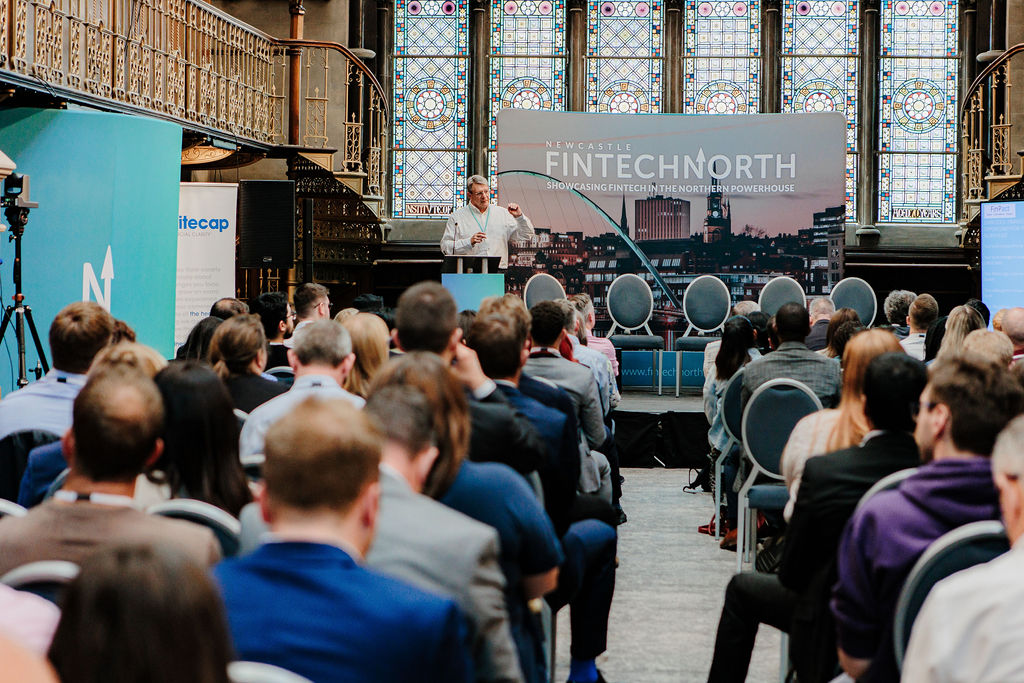
Following an initial networking session, Ryan Walsh, Senior Marketing Executive at FinTech North, formally welcomed attendees. Ryan shared an overview of FinTech North, outlining our strategic priorities and planned activity for 2026, including our upcoming Liverpool flagship conference taking place on 19 March.
Attendees were then welcomed to the venue by Lilly Chatwin, Ecosystem Manager at Barclays Eagle Labs. Lilly provided an overview of the extensive support available through Eagle Labs, highlighting how the network helps ambitious businesses to connect, innovate and grow across the UK.
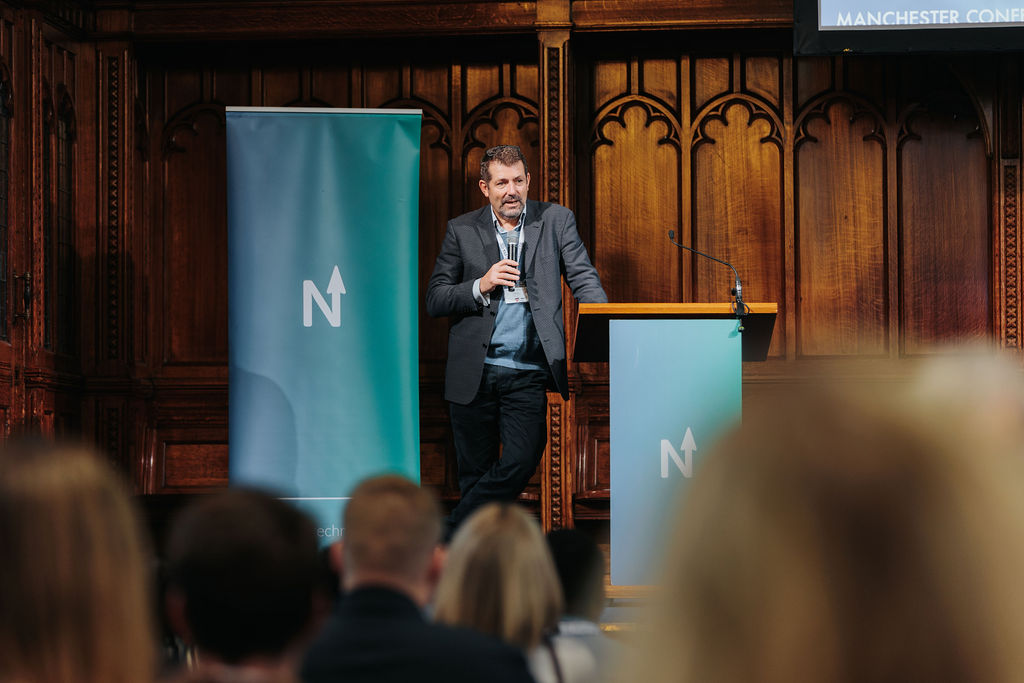
Richard Harris, Partner at DTM Legal, then took to the stage to introduce DTM Legal and share the firm’s history in the North West. Richard spoke about DTM’s long-standing involvement in Liverpool’s FinTech ecosystem, its work with FinTech and technology start-ups, and the firm’s strategic shift from a London-centric focus to Liverpool. He reflected on the evolution of the North West’s FinTech landscape and the importance FinTech North’s activity and community, the Whitecap Liverpool Ecosystem Report and the Liverpool Growth Platform in supporting this growth.
Richard noted that ‘the world of risk is getting bigger’, setting the scene for the panel discussion and highlighting how risk is evolving rapidly across areas such as artificial intelligence, fraud, deepfakes, scams, cyber security and financial crime.
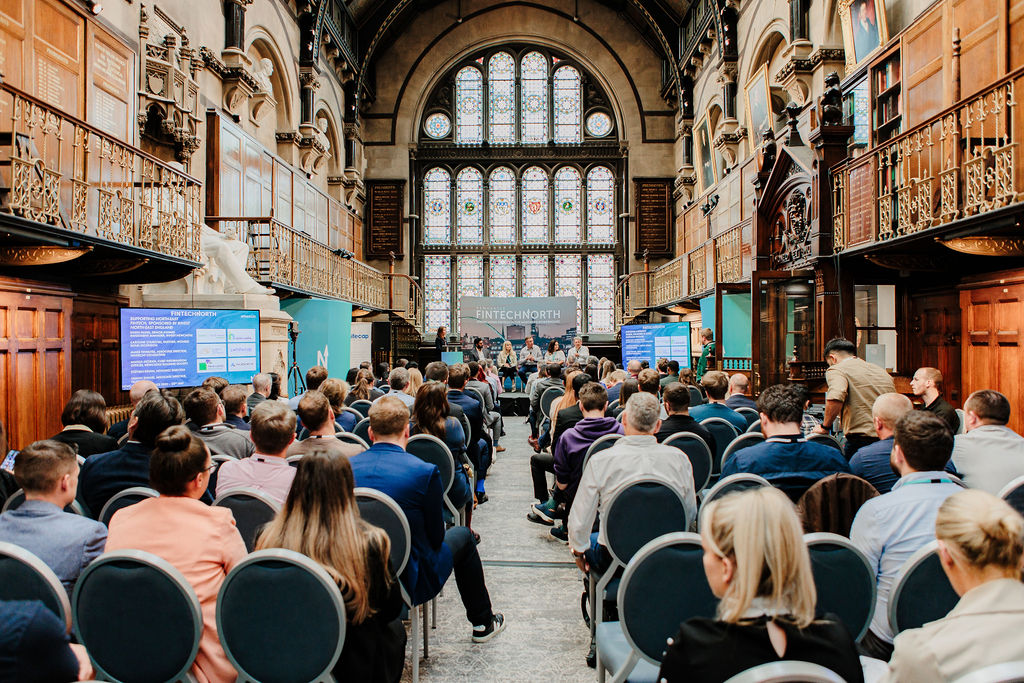
The panel discussion was moderated by Kate Roberts, Partner and Head of Liverpool at DTM Legal, and featured expert insights from Angela Hesketh, Head of Government and Public Affairs at PEXA; Dr Alison Lui, Associate Professor in Corporate and Financial Law at Liverpool John Moores University; Andy Porter, Commercial Director at iCede; and Naheed Akram, Founder and Transformation Leader at Karakor Consultancy.
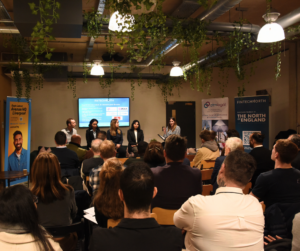
Kate opened the discussion from a legal perspective, emphasising the growing sophistication of risk and the importance of addressing fundamental questions around responsibility and liability. She highlighted how organisations must increasingly ask what can be done to mitigate risk and where accountability ultimately sits.
Each panellist then introduced themselves, sharing their perspectives on fraud and risk from across sectors including technology transformation, digital property transactions, insurance, academia and consultancy. A key theme emerged early on: fraud is widespread, does not discriminate by business size, and can affect anyone.
Andy highlighted the importance of understanding concentration risk and supply chains, stressing the need to ensure businesses are operationally resilient and sustainable. Across the discussion, panellists shared real-world use cases, underlining just how common and systemic these challenges have become.
Angela stressed the importance of robust due diligence, particularly when it comes to people and suppliers. She noted that fraud causes reputational damage regardless of where fault lies, and that trust is fundamental within digital, data and financial services. Once trust is lost, it can be extremely difficult to regain.
Artificial intelligence was a central topic throughout the discussion, with panellists exploring both its benefits and risks. AI was recognised as a powerful tool for driving efficiency and freeing up time for teams, particularly within cyber security and risk defence, enabling more in-depth investigations. However, this was balanced against growing concerns around deepfakes, scams and increasingly sophisticated social engineering.
Naheed expanded on how clients, particularly in banking, are navigating this rapidly evolving landscape. She noted that much of the change within FinTech and banking is technology-driven, with social engineering attacks becoming more professional and industrialised through the use of AI-generated voices and videos. With the rise of instant digital payments, legacy systems are not always able to keep pace, making alignment between operations and technology increasingly critical.
The panel also explored the use of AI for positive outcomes, such as onboarding, due diligence checks and authorisation processes, and the balance required between speed and control. An often underestimated risk highlighted was that a significant proportion of banking fraud involves direct contact with consumers, with banks frequently expected to reimburse customers, creating a substantial financial impact.
Angela emphasised the importance of guardrails when deploying AI within specific environments, noting that while AI can remove friction, appropriate protections are essential. Risks around the use of open-source AI and data were also discussed, particularly around the loss of proprietary rights and the need for clear governance.
Alison repeatedly stressed the importance of trust and the adoption of a zero-trust approach to mitigate scams. With deepfake videos, calls and messages becoming increasingly difficult to detect, businesses must question everything and verify all interactions. Alison shared research-based use cases involving technology and payments, including examples where significant sums had been transferred as a result of fraudulent calls, highlighting the growing prevalence and severity of these incidents.
The discussion returned frequently to reputational harm and the long-term impact of fraud. Practical mitigation strategies were explored, including multi-factor authentication, asking verification questions, labelling and watermarking content, education for platform users and clearer language around financial information. While legislation and regulation were discussed, panellists acknowledged that enforcement alone cannot recover losses and must be complemented by education, awareness and organisational responsibility.
Human psychology was another important theme, with recognition that some individuals are more vulnerable to these attacks. Identifying and addressing vulnerabilities through training and awareness was highlighted as a critical step.
On the regulatory front, Andy discussed the operational challenge of balancing customer experience with the friction required for fraud prevention. Technology, while contributing to risk, was also recognised as a powerful tool for detecting patterns and targeting fraudulent activity more effectively.
Angela noted that it may be unrealistic for regulation to fully keep pace with technological change, making self-protection, education, corporate empowerment and appropriate insurance increasingly important. Naheed highlighted the growing role of agentic AI in minimising fraud, supporting know-your-customer processes and reducing administrative burdens, giving compliance teams greater capacity to focus on high-value work. AI’s ability to identify trends and patterns more quickly than humans was seen as a significant advantage when used safely and responsibly.
From an insurance perspective, Andy addressed common misconceptions around coverage for AI and cyber risk, emphasising that fraud is systemic rather than random. While cyber security measures can support investigation and data restoration, they do not compensate for financial losses or reputational damage.
In closing, each panellist shared the single most important change they believed organisations should prioritise. Andy emphasised education and understanding regulatory, operational and cyber responsibilities. Alison reinforced the importance of a zero-trust approach. Angela highlighted the need to strengthen digital trust to reduce vulnerability. Naheed pointed again to the use of AI for administrative efficiency and value-adding activity, while Kate stressed the importance of increased digital education.
The event concluded with an extensive audience Q&A, covering what good practice looks like in reality, case studies and penetration testing. Trust emerged as a consistent and central theme throughout the evening.
The discussion was followed by a vibrant networking session, bringing the FinTech community together to continue conversations sparked on the panel.
Thank you to everyone who attended, to our sponsors, DTM Legal, hosts, Barclays Eagle Labs, and to our excellent speakers for sharing their expertise. We look forward to continuing this conversation at our upcoming Liverpool conference on 19 March.
For more information and for opportunities for collaboration, please reach out to us at info@fintechnorth.uk.