FinTech North Lending Summit 2026: Write-up

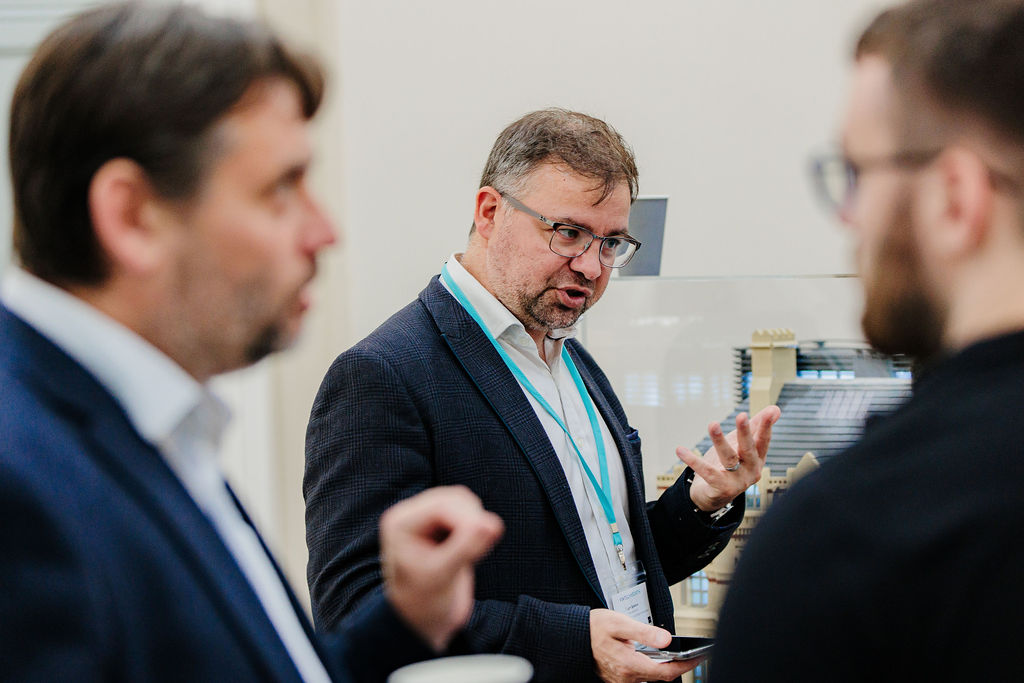
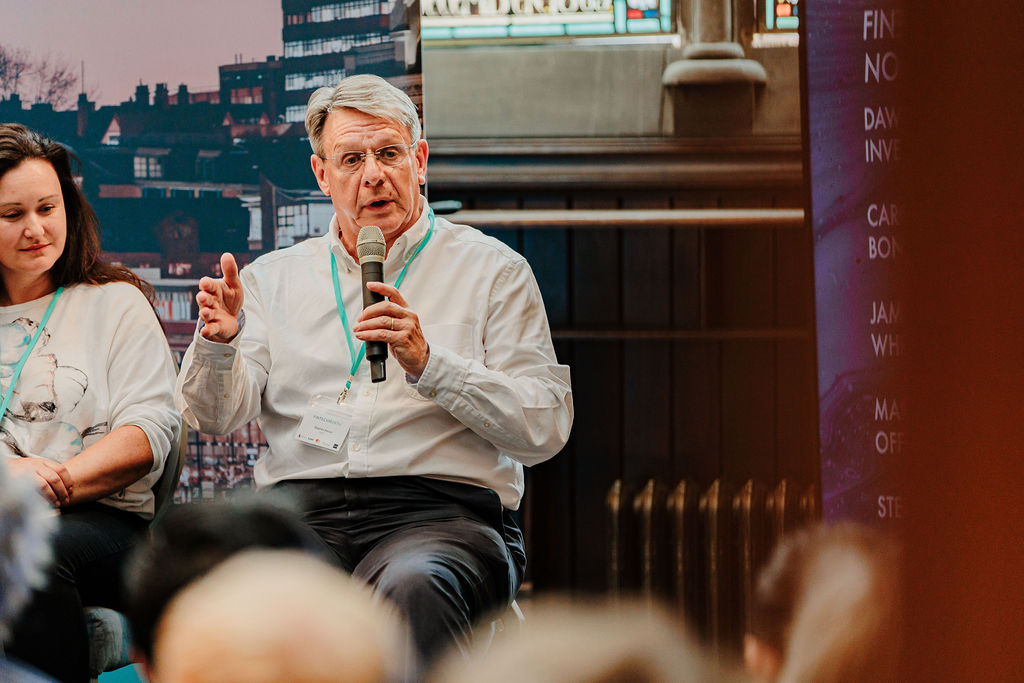
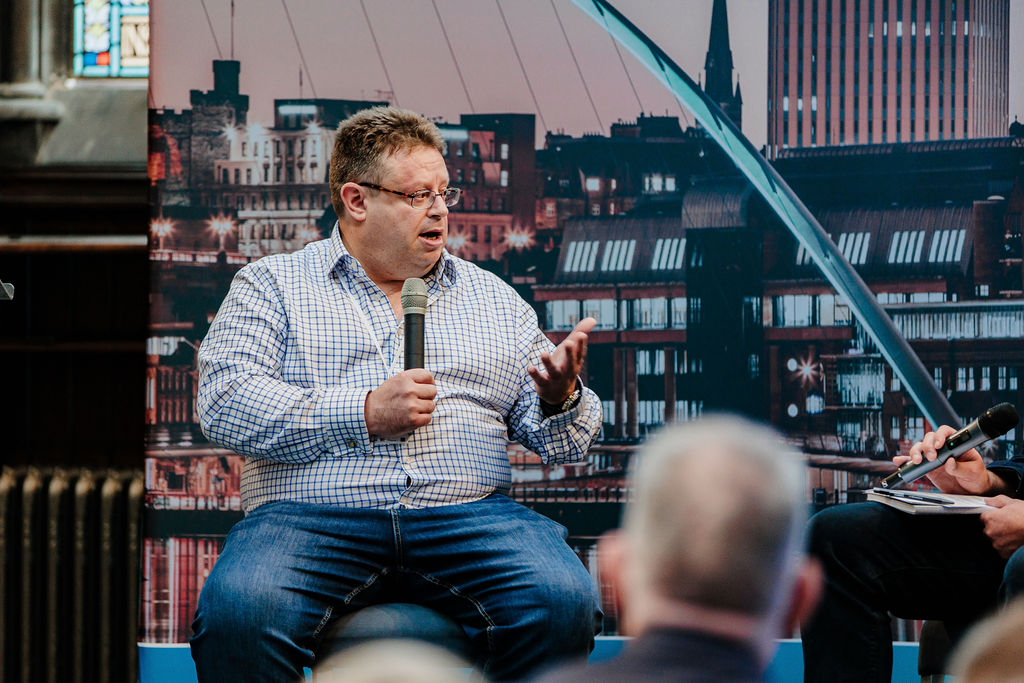
On Wednesday 23rd September, the Northern FinTech community gathered in Leeds for FinTech North‘s inaugural Lending Summit, hosted at Fearns – Department, Leeds Dock, in partnership with headline sponsor Lenvi, and brand sponsors PEXA and RSM. The summit brought together leaders from across lending, home ownership, credit and the wider financial services sector to explore the forces reshaping modern lending.

Welcome from FinTech North
The day opened with a welcome from Joe Roche, FinTech North’s General Manager, who highlighted FinTech North’s story, its links to Leeds Digital Festival, and upcoming activity before introducing the day ahead.
Setting the Scene: The State of Lending
Richard Carter, CEO of Lenvi, opened with an overview of the state of lending, noting that borrowing has grown by around 10% over the past year – levels last seen in 2017 – in a market he described as ‘incredibly vibrant.’ He pointed to inflation, shaped by wider geopolitical and economic conditions, and rising interest rates as key drivers of changing borrower behaviour, with more consumers declaring themselves unable to repay debt as they look for a way out of unaffordable borrowing.
Rules of the Road: The Regulatory Outlook for Lending
Zoe Morton, Senior Industry Analyst at RSM, gave the regulatory outlook, touching on consumer outcomes and resilience, collateral management and tokenised mortgages. She welcomed the recent regulation of BNPL as good news for consumers, though noted it has made borrowing easy without always being matched by full consumer awareness, and pointed to open banking as the next chapter in the journey, alongside the importance of data ownership, governance and explainability.
Looking ahead to implementation from 2027, Zoe closed with three key thoughts: that innovation is moving firmly into the regulatory mainstream; that data will reshape lending; and that regulators will support innovation where governance, resilience and customer outcomes can be demonstrated – concluding that trust will be the most valuable asset of all.
The Agentic Shift: AI’s New Role in Lending
Moderated by Sam Goodacre, Director of Product, Lenvi, this panel brought together Katharine Wooller, Chief Strategist Banking & Financial Services, Softcat; Claire Smith, Director of Marketing, Oakbrook; Matthew Whetton, Chief Technology Officer, Acquired.com; and Simon Quin, Director of Technology, Lenvi.
The panel discussed how the line between AI and traditional software development has blurred, with Simon noting that Lenvi is adopting agentic engineering – using AI agents to write, test and revise code under human guidance – and reflecting that who writes software is changing. The panel weighed the resulting risks around assurance and accountability against the wider hype surrounding AI, agreeing that good governance and engineering practice are what make strong results possible. The panel also discussed building AI-powered scorecards to support responsible lending decisions, explaining that the traditional three-to-six-month build process can now be significantly shortened with AI, and that such tools can open up more offers to under-served customers.
Katharine argued that agentic AI marks a fundamentally different shift from earlier, more supervised uses of the technology, raising the stakes for what’s at risk if something goes wrong, and stressed the importance of audit trails, explainability and guardrails that separate what AI can see and access – describing an agent as ‘a very junior but very enthusiastic developer.’
Simon spoke about the value of building working prototypes and ensuring engineering teams understand their own work, noting that sentiment across the industry is becoming more positive than negative. The panel closed by discussing AI’s growing role in operational resilience and business-critical processes, and the importance of guardrails and addressing ethical bias as that trust grows.

Forms Are Dead: Long Live the Future of Home Buying with Agentic AI
Philip Bonhard, Head of Experience Design at Lloyds Banking Group, explored how agentic AI could fundamentally reshape the home-buying journey. Philip argued that despite being one of life’s biggest milestones, home buying remains dominated by forms, repeated questions and administrative friction – for many buyers, finding the right mortgage is more complex and time-consuming than finding the right home.
Rather than customers repeatedly entering information and navigating fragmented processes, he set out a vision for intelligent AI agents acting on a customer’s behalf: gathering data, completing tasks, coordinating between participants and guiding decisions throughout the journey.
Drawing on real-world challenges across mortgage applications and conveyancing, Philip demonstrated how agentic AI could reduce effort, remove duplication and create experiences that feel more conversational, proactive and personalised, with trusted digital agents capable of orchestrating complex workflows across lenders, brokers, estate agents and legal providers — shifting the buyer’s focus from securing finance to finding the home they actually want.
He closed by challenging the room to think about the opportunities and risks of agent-led experiences, and posed the question: if AI can do the paperwork, what should the home-buying experience feel like instead?
The Last Mile: Rethinking the Mortgage Journey
Moderated by Paul Godsmark, Partner at Brabners, this panel brought together Julian Wells, Head of Communications at PEXA; Emma Jaggar, Senior Mortgage Product Manager at Skipton Building Society; and Stuart Cheetham, CEO of MQube.
Stuart set the tone by arguing that making everything work in real time for borrowers is the ultimate goal, and that ease and certainty are hard to achieve if the process is slow. Emma reflected on how Skipton Building Society‘s approach to innovation is about building products around customer experience and genuine need, while Paul raised the question of whether the real barriers to progress sit with technology, product, regulation or people – the panel agreeing on the importance of getting each step of the process right and avoiding ambiguity for borrowers.
Julian predicted that better technology and trusted data are what will move completion timelines from months to weeks, while Stuart pointed to the direct-to-consumer journey as an area likely to change quickly over the next three to five years, driven by integrating large language models to achieve greater accuracy and better pricing. Emma noted that around 95% of mortgages are arranged through brokers, and that technology has a role to play in helping borrowers navigate the process themselves.
The panel also discussed the challenge of product switching; Julian argued that switching mortgage lenders should be made as easy as switching banks or phone contracts, while Stuart warned that many people currently accept a worse deal simply to avoid the hassle of switching – a tension that sits uneasily with Consumer Duty’s expectation that customers are supported to get the best deal for them.
Stuart closed by arguing that lenders need to address the fundamentals of real-time offers and genuine efficiency gains, while Emma pointed to the positive impact of more choice for people with low or no deposits, even as this increases competition in the market.

Meet the Modern Borrower: A Fireside Chat
James Brown, CEO, Leeds Credit Union, and Lindsay Gustafsson, Head of Risk, Novuna, discussed how the modern borrower is changing. The conversation covered how today’s borrowers have access to more choice than ever, drawing on multiple sources of credit, and how borrowing patterns are shifting – for example, BNPL, once associated mainly with fashion and white goods, is increasingly being used for everyday essentials, with some customers putting essential spending on BNPL and failing affordability assessments as a result.
Looking ahead, the discussion considered what the future borrower might look like, shaped by people holding multiple jobs, greater freedom of movement, more remote working and a preference for renting and travel – all pointing to a need to build financial resilience and think differently about savings strategies, with education identified as key to supporting the modern, more flexible borrower.
Both speakers agreed that anyone can become vulnerable, citing the example of COVID and furlough, and that many people don’t self-identify as vulnerable – underlining the importance of budgeting, education and resilience for everyone.
The conversation also touched on recognising patterns and behaviour to help people build credibility over time, and on the importance of not evolving too fast and leaving a generation behind, with a blended approach of digital services alongside face-to-face support seen as important for the future.
The discussion also considered the risks that come with faster payments: as pay by bank and faster payments make instant transactions more common, some friction in the system remains necessary – not just from a fraud perspective – since less interaction gives fraudsters, who evolve faster than the systems built to stop them, more room to exploit. Gambling-related harms and the importance of getting regulation right in this area were also raised.
Smart Recovery: Evolving Collections Without Losing the Human Touch
Andrew Ducker, VP, Global Collections & FAO Practices, Concentrix, spoke about evolving collections without losing the human touch. Andrew discussed the disproportionate risk that can arise in the collections process and the continued need for a human in the loop, particularly for the more vulnerable customers that collections and fraud acquisition teams encounter. He stressed that humans remain important in collections, and reflected on the balance between bot and human interaction – cautioning against AI-generated responses that don’t reflect genuine understanding of a customer’s situation, or, as it was put, the importance of not ‘faking empathy.’
Ones to Watch: Lending Innovation Showcase
The day closed with FinTech North‘s popular showcase format, spotlighting emerging lending start-ups from across the North, moderated by Rachel England, Events & Projects Manager, FinTech North.
Hal Sarjant, CEO, ROSA, introduced ROSA‘s independent monthly verification service for UK non-bank mortgage lenders and their funders, checking for double-pledging, book integrity and money movement to build trust between originators and their funding lines.
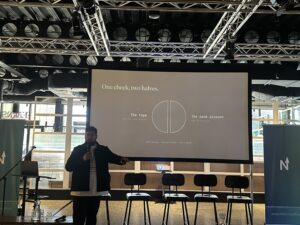
Alex Beardsley, Founder, Debeo, presented Debeo‘s platform, which helps UK small businesses understand their finance options, compare the true cost of borrowing, and build a lender-ready application pack.
Daniel Rajkumar, CEO, rebuildingsociety.com, closed the showcase with an update on rebuildingsociety.com‘s peer-to-business lending platform, which has loaned over £35m to UK businesses since 2013 by connecting them with everyday investors. Daniel also referenced rebuildingsociety.com‘s new partnership with FarmCash, which provides invoice finance for farm inputs and machinery import bridging finance to the agricultural sector.
Thank You
Thank you to our headline sponsor Lenvi, and brand sponsors PEXA and RSM; to all of our fantastic speakers and panellists who gave their time and expertise throughout the day; to the brilliant team at Fearns – Department, Leeds Dock; and to our community for making our inaugural Lending Summit possible.
For more information and for opportunities for collaboration, please reach out to us at info@fintechnorth.uk.