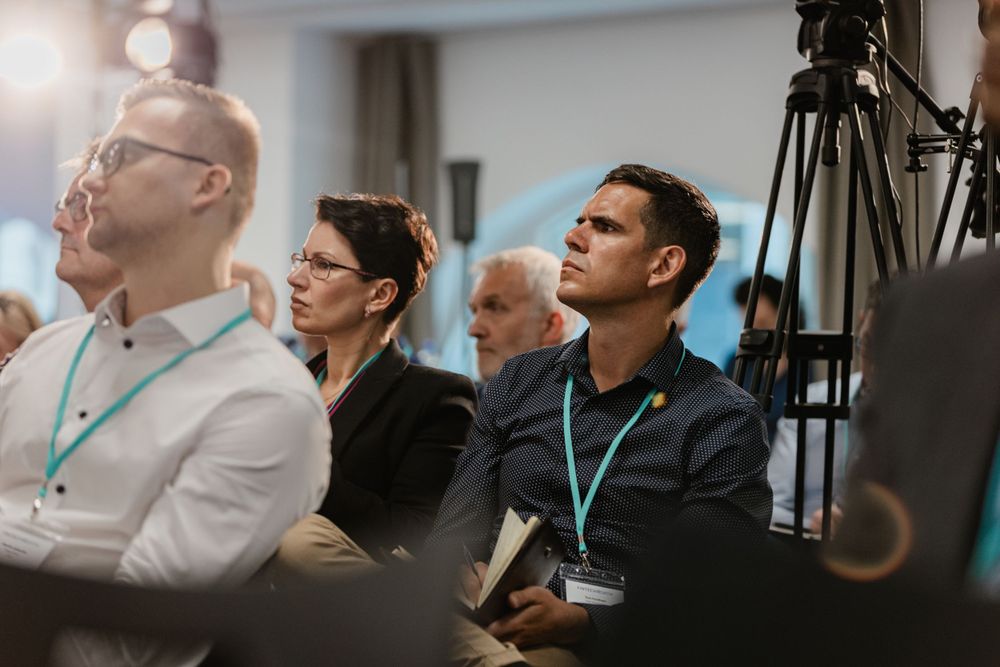
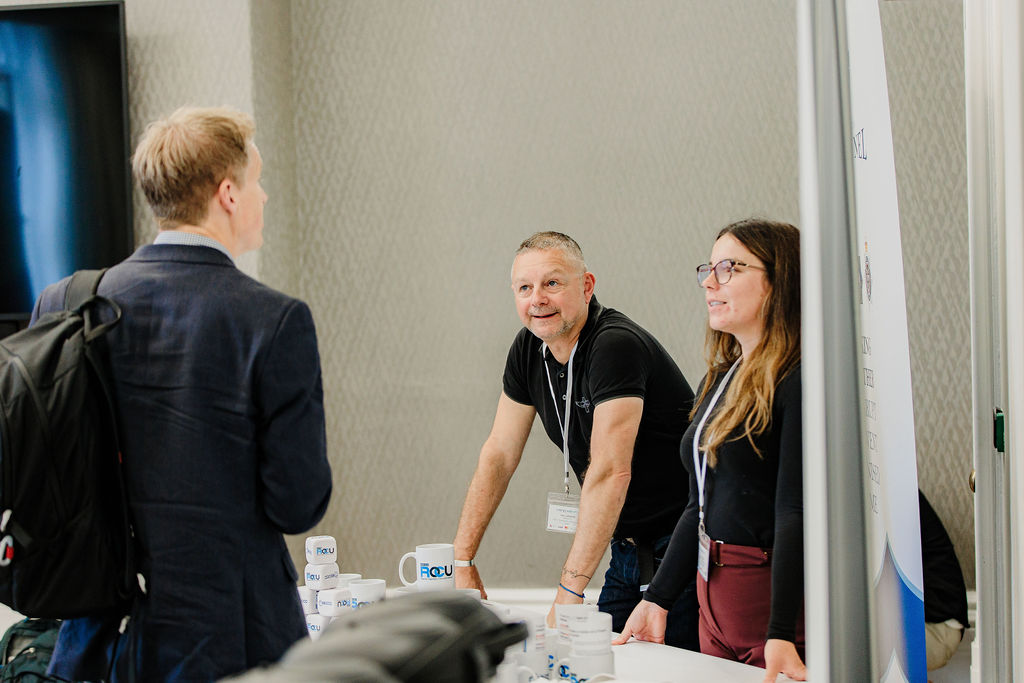
Northern FinTech Summit Day 1 Write-up: Market & People
On Wednesday 21st October, the Northern FinTech community returned to York for Day 1 of the third annual Northern FinTech Summit, hosted in partnership with Aviva, Barclays Eagle Labs and CubeMatch, with support from the North’s inward investment agencies and exhibition sponsors Layers Studio. Held at the Guildhall, a University of York building and home to Barclays Eagle Labs, the day explored the Market and People themes, from political change, regional growth, geopolitics and fraud to AI talent, skills, regulation and culture.

Welcome from FinTech North
Joe Roche, General Manager of FinTech North, opened the day by welcoming delegates, sharing the story of FinTech North so far and highlighting the breadth and diversity of the community it supports. He also thanked the event sponsors, and Chris Lunardi, Ecosystem Manager at Barclays Eagle Labs, who was unable to attend, for hosting and supporting the event.
The Chris Sier Keynote
Colin Payne, Head of Innovation at the FCA, delivered the Chris Sier Keynote, honouring FinTech North’s former Chairman and his contribution to championing the sector. Colin put to the room the question Chris asked of pension costs, whether those acting on our behalf are really acting for us, and applied it to AI: ‘Whose agent is it?’ He highlighted the importance of earning trust as AI agents take on more financial tasks, citing FCA research from this summer finding that 44 per cent of younger investors believe AI financial information is regulated. Clear accountability, demonstrable authority and sensible limits will be essential if innovation is to benefit customers and the wider sector.
Colin also focused on the North’s opportunity to shape the next generation of financial services, arguing that progress depends not only on technology such as AI and data, but also on talent, education, ambition and institutions that help useful innovation flourish.
The Market in Motion: Political Change, Regional Growth and the Forces Reshaping UK Fintech
Moderated by Stephen Ingledew OBE, Chairman of FinTech Scotland and Senior Independent Non-Executive Director at CFIT, the panel brought together Andy Thornley, Head of Regulatory Policy at Innovate Finance; John Huddleston, Senior Manager, UK Growth and Investments, Group Public Affairs at Aviva; Jackie Kingham, Director, Business Transformation at Raisin; and Chelsea Boothroyd, Nexus Engagement Manager at the University of Leeds. Andy highlighted fintech’s place in the Government’s Industrial Strategy and Growth and Competitiveness Strategy, alongside the importance of funding high-growth businesses through the British Business Bank. John spoke about the growing flow of pension capital into UK venture investment, stressing the need for strong domestic opportunities in which that capital can be invested. Chelsea described the role universities can play in bringing academia, start-ups and funders together, including through initiatives that connect financial services organisations with new ideas and solutions.
Jackie reflected on moving to the North and discovering the scale of activity already taking place, linking ‘good growth in every postcode’ to making the region’s successes more visible and attracting talent. She also highlighted the Great British Savings work to make it easier for people to move idle savings to better rates. Across the discussion, ‘good growth’ meant more than growth at any cost: it should benefit communities and individuals and help counter the gravitational pull of the South East. The panel’s resounding message was to be proud of what the North has to offer, collaborate across the region and build here.
The Geopolitics of Fintech: Risk and Opportunity in a Shifting International Landscape
Ben Wilson, Vice President, Government Affairs & Policy, UK at Mastercard, explored how geopolitical uncertainty is changing investment flows, with investors favouring selective backing, strong governance and clear paths to profitability. He suggested resilience has become an investment metric, that compliance and regulation are becoming strategic rather than back-office concerns, and that cyber security is among the most prominent geopolitical risks, with trust the most valuable asset.
Ben also pointed to opportunity, with fragmented cross-border payments generating demand for fintech solutions. He set out what the industry can do: build resilience by design, diversify exposure, engage proactively with regulators and keep investing in innovation, including for agentic payments.
How Technology, Regulation and Smart Data Are Reshaping Homebuying in the UK
Angela Hesketh, Head of Government & Public Affairs at PEXA, explored a familiar frustration in the traditional homebuying journey: buyers, lenders, conveyancers and other parties often work from different information and struggle to see the same picture, leading to repeated requests, manual checks, late-arriving information and avoidable delays. She outlined how Smart Data and better-connected property information could help, allowing property and financial data to be shared securely so that problems surface earlier, with less repeated effort and greater confidence about moving day.
Angela drew a parallel with open banking, where customers consent to information being shared securely between organisations. The challenge for property is to make data similarly usable and trustworthy across a more complex journey, because access alone is not enough: data must be consistent, reliable and available at the point it can help people make decisions.
Angela also emphasised the importance of connecting the full homebuying journey, from understanding affordability and choosing a property through to the secure movement of funds, completion and registration of ownership. Better information at the outset needs to carry through into a successful move, with technology helping professionals coordinate the point at which money changes hands and ownership transfers. For consumers, the opportunity is greater certainty throughout the process, including the confidence that they can collect their keys and move into their new home as planned.
Staying Ahead of Fraud in a Faster, Smarter Financial System
Rachel England, Events & Project Manager at FinTech North, hosted a fireside chat with Chris Anderson, Managing Partner, Financial Crime Solutions Practice at CubeMatch, and Naheed Akram, Founder of Karakor. They discussed whether fraud prevention is keeping pace as financial services become faster and more frictionless, particularly as AI changes the risks and opportunities for both attackers and defenders.
The conversation also explored how scaling businesses with limited resources can build financial-crime prevention into their growth plans, what SMEs can learn from attacks on larger organisations, and how firms can share intelligence and collaborate across organisational boundaries, with regulation and policy forming part of the wider context.
Built in the North East: Growing the Next Generation of AI Talent
After lunch, Steve Kevan, CEO and Co-Founder of FinPact, opened the People session by focusing on the North East’s opportunity to develop the next generation of AI talent. He highlighted the region’s designation as one of three AI Growth Zones in the UK and FinPact’s work with the North East Mayoral Strategic Authority to build AI literacy, underlining that growing AI capability means more than adopting tools: people and organisations need the understanding and confidence to use them effectively and responsibly.
Steve introduced Edge AI Skills (EAS), a new skills venture being developed with Newcastle College Group as lead further education partner and Mediaworks as platform partner, with colleges, training providers and firms all invited to get involved.
Keeping Pace: Fintech Talent and Skills in the Age of AI
Moderated by Rhys Griffiths, Relationship Manager at FinTech Wales, who opened by welcoming the audience and introducing FinTech Wales as the Welsh member of the FinTech National Network, with a strong focus on skills, the panel featured Crispin Read, CEO of The Coders Guild; Dr Ashleigh McLellan, Founder of Anumi; and Macs Dickinson, Director of Engineering at LHV Bank. Macs described how hiring is changing in the age of AI: the question is less what candidates have built and more whether they understand it and can talk through their decisions. He said his engineering team had been the ‘guinea pigs’ when the organisation began rolling out AI tools, and offered a memorable reminder on accountability: ‘The AI will not go to jail, you will.’ Crispin said he is more interested in outcomes, that skills like empathy, prioritising, communication and summarisation matter more as code gets faster, and that tools are developing faster than qualifications can.
Ashleigh warned about the risk of outsourcing our thinking to AI, stressing the need to retain curiosity, judgement and critical thinking. Crispin called for psychologically safe environments where people can ask questions and fail without fear, with ‘learning to learn’ as a core skill. Across the discussion, the panel explored how AI is changing the skills employers value, the importance of understanding rather than simply producing work, and the need to keep human judgement and communication at the centre.
Regulation as a Force for Good
Hannah Morrison, Founder of Clear Creator, made the case for treating regulation as a force for good by designing financial services around real people and their needs. Clear Creator works with FCA-regulated firms to identify where digital customer journeys may fall short of Consumer Duty expectations, then helps put the processes and governance in place to address them, with a focus on making digital products accessible, usable and understandable.

Her message to the room: when compliance is built into how an organisation works rather than bolted on afterwards, regulation stops being a hurdle and becomes a route to the trust customers are looking for.
The Missing Data: Why Fair Access Depends on the People in the Room, Not Just the Policy
James Brown, CEO of Leeds Credit Union, opened with two people applying for the same £2,000 loan, both earning the same and able to afford the repayments. One has years of borrowing history, the other has never borrowed but pays rent every month, so which gets the loan, and what if the missing data is the problem? He argued that fair access is not delivered by policy alone: it depends on who asks the questions, whose experience counts and who is willing to challenge decisions, with the consequence that people who cannot access mainstream credit may turn to alternative or payday lenders.
James closed with three practical commitments: bring people with real experience of financial exclusion into product design early, look beyond averages to understand where customers drop out, and create formal opportunities for challenge in product and risk decisions. His closing question for the room: ‘who is affected, who was heard, and who is missing?’
Can Culture Scale as Fast as Growth?
Moderated by Bianca Spruit, Founder of Sprout Coaching, the panel featured Samantha Turner, CPO at Lenvi; Suzanne Lawson, Partnerships Manager, Group Innovation at Aviva; Natalie Garner, Transformation Programme Lead at DXC; and Anna Chandler, who brings a wealth of experience in fintech consultancy, fractional leadership and marketing. The panel explored whether culture happens organically or must be deliberately built, what to protect and what to allow to evolve as a business scales, who owns culture when things change, and what makes people stay or leave. Trust, autonomy and making sure everyone is involved in creating value were recurring themes, and Samantha reflected on ‘the fun experience of starting again with our culture as we became more established’.
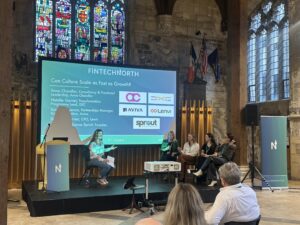
Panellists stressed the importance of storytelling as a leader and of leaders embodying the values they ask others to follow: when someone in authority does not live those values, people notice and may conclude they are not important. They discussed having awkward conversations with kindness and compassion, and Natalie named honesty as a major builder of trust. In times of uncertainty, organisations may be tempted to say very little, but people can often handle uncertainty better than expected, and silence on a difficult topic can erode trust.
Evening Social
As the day drew to a close, delegates headed next door to Lendal Cellars for the Evening FinTech Social.
Thank you to our hosts and partners, Aviva, Barclays Eagle Labs and CubeMatch; to the North’s inward investment agencies for their support; to our exhibition sponsors, Layers Studio; to all of our speakers and panellists; and to our community for making the day possible.
Click here to find out what happened on Day 2.
For more information and for opportunities for collaboration, please reach out to us at info@fintechnorth.uk.